A Doctor's Letter for Flying with Medication and Syringes: What to Ask For

A doctor's letter for flying with medication and syringes: what should you ask to have in it? Under the guidance of Clalit Health Services, an Israeli health fund, anyone carrying medication given by syringe or pump must show a prescription, and a letter isn't required there. Even so, public health bodies abroad recommend taking a letter, especially when injections are involved. Ask your doctor for a letter in English that lists your medications, including the generic names, and keep the prescription with it.
In this article
Do you need a doctor's letter to fly with medication at all?
The Israeli guidance talks about a prescription. Clalit Health Services writes that travelers carrying medication given by syringe or pump, such as insulin, must show a prescription for it to representatives of the security authorities at the airport, and recommends also taking spare prescriptions. A doctor's letter doesn't appear there as a requirement.
Source: Clalit Health Services, medication to take abroad (Hebrew)
Beyond security at Ben Gurion Airport, a letter helps in other places: at border crossings, during a connection, and with a doctor or pharmacist at your destination. Public health bodies abroad recommend one:
- The US CDC recommends asking your doctor for a note if you take injectable medicines, such as insulin, or controlled substances.
- The UK's travel health service (TravelHealthPro) recommends asking for a letter that details your medicines by their generic names, and notes that it can help during border control checks.
Sources: CDC, Traveling Abroad with Medicine · TravelHealthPro, Medicines and travel
What should you ask to have in the letter?
Your doctor writes the letter, and its medical content is their decision. What you can do is come to the appointment with a list of what these health bodies mention, plus one item that is plain common sense:
- The names of your medications, including the generic name. The same medication is sometimes sold under a different brand name in another country, and the generic name is what identifies it. TravelHealthPro recommends this for the letter, and the CDC recommends generic names on prescription copies.
- A mention of the injections. If you're carrying injection pens, syringes or needles, the letter is where they're explained. TravelHealthPro recommends that, for injections, the letter be on your doctor's or clinic's official letterhead.
- Your condition and treatment plan, when needed. According to the CDC, if a medication isn't allowed at your destination, it's worth asking for a letter that describes your condition and your treatment plan. That's what you check in advance, in the next section.
- In English. The letter is meant for people abroad, so it's worth asking for it in English.
Our tip: ask for your name to appear in the letter in English exactly as it does in your passport, and keep a photo of the letter on your phone. That's our idea, not an official guideline.
Before you ask: check your destination country
The CDC recommends checking with the embassy of your destination, and of any countries where you have a connection, that your medications are allowed there. TravelHealthPro recommends the same check with the consulate or embassy. If it turns out there's a restriction, that's exactly what to tell your doctor when you ask for the letter.
What else to take along with the letter
- A prescription, plus spare prescriptions. According to Clalit, if your medication is lost, your doctor and your pharmacy are the ones to turn to for a new prescription. The CDC recommends taking copies of your prescriptions with the generic names.
- A list of your medical conditions and regular medications. Clalit recommends keeping it in your bag or wallet.
- The original packaging. Clalit writes that airport security guidelines require medication to be kept in its original packaging. Our tip: if the boxes take up a lot of space, the medication and syringes stay in their intact sealed plastic cover, and at least one original box, folded or cut down, goes in your bag to show at screening. That's our idea, not an official guideline.
- A medical summary in English, if your health fund produces one. Maccabi Healthcare Services lets members generate a report in English from their medical file, which includes, among other things, medications purchased in the last six months and drug sensitivities, and recommends printing it and carrying it abroad. With other health funds, it's worth asking whether they offer something similar.
Source: Maccabi Healthcare Services, medical report in English (Hebrew)
The health fund summary doesn't replace the letter: it doesn't explain why you're carrying injections, and it isn't signed by your doctor. It's better to take both.
The full list of what to pack is in the packing checklist for patients traveling abroad, and we wrote about the screening itself in our article on flying from Israel with refrigerated medication.
What you won't find here
A template for a medical letter. What is written about your condition, your dose and your treatment is your doctor's decision, and we don't write it for them. You also won't find your medication's storage instructions here. They're written in its patient leaflet.
Questions that keep coming up
Do I need a doctor's letter to fly with syringes?
Under Clalit's guidance, anyone carrying medication given by syringe or pump must show a prescription, and a letter isn't required there. Health bodies abroad, such as the US CDC, recommend asking for a doctor's note if you take injectable medicines.
What goes in a doctor's letter for flying?
Your doctor writes the letter. It's worth asking for the names of your medications including the generic names, a mention of injections if you have them, and for it to be in English. If a medication is restricted at your destination, the CDC suggests the letter also describes your condition and treatment plan.
Does the letter need to be in English?
It's meant for people abroad, at border crossings and with a doctor or pharmacist at your destination, so it's worth asking for it in English.
Where can I get a medical summary in English?
Maccabi members can generate a medical report in English from their medical file, on the website or in the app. With other health funds, it's worth asking whether they offer something similar.
And the part a letter doesn't solve
The letter helps explain what you're carrying. It doesn't keep your medication cool along the way. For that you need a medication cooler: a cooler bag with ice packs, or an electric one that cools by itself.
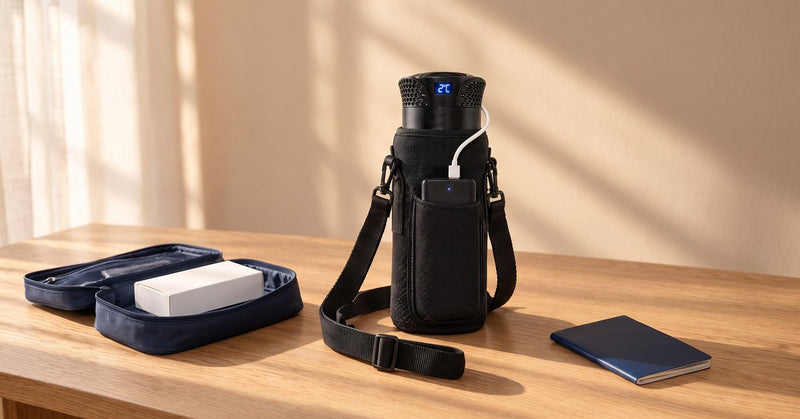
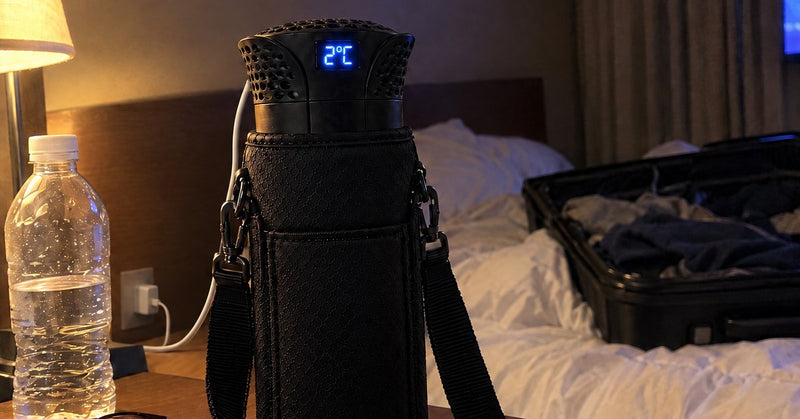
The Secrets Box by Practi, an electric medication cooler, was built for exactly this part: it plugs into a wall outlet or a power bank, stays within 2 to 8°C (36 to 46°F) as long as it is plugged in, and shows the temperature on a digital display. It works from any USB source, including a USB adapter for the car's lighter socket. The power bank and the car adapter are sold separately and are not included in the box. There's no disconnect alert, so check the connection now and then.
How this article was written. We gathered this information from public sources online and brought it together in one place. We are not a medical body, we have no medical or pharmacy qualification, and no medical professional has gone over this article.
Accurate as of the update date shown at the top of this article. Information may change. Security procedures, airline guidelines, medication leaflets and product specifications change from time to time, and the information here may no longer be up to date. It is the reader's responsibility to verify every detail with the official source before acting on it.
This article is general information, not medical advice. For questions about your medication, talk to your pharmacist or doctor. It contains no recommendation on medication storage, dose, method of use or how long a medication stays usable. The only sources for those questions are your medication's patient leaflet, your pharmacist and your doctor. Responsibility for storing and using the medication lies solely with the user and their healthcare provider. The Secrets Box is a cooled carrying case for medication and is not a medical device.
Another question? All frequently asked questions · or message us on WhatsApp