Flying from Israel with Refrigerated Medication: What Really Happens at Ben Gurion Security

Traveling with medication that has to stay refrigerated, and not sure what will happen at security? According to what Clalit Health Services publishes, anyone carrying medication given by syringe or pump must show a prescription to the security staff at the airport, and the security guidelines require medication to be kept in its original packaging. The recommendation there is to carry it in your hand luggage, not in your checked suitcase. That's the core of it.
In this article
This information is general and for convenience only, and it is not medical advice. Medication storage, temperatures and doses are set by your doctor, your pharmacist and the manufacturer's leaflet. Talk to a professional before making any decision.
Three points from the Israeli guidance
Clalit Health Services publishes a page for patients traveling abroad, and three points from it matter to anyone flying with refrigerated medication:
1. A prescription. Travelers carrying medication given by syringe or pump, such as insulin, must show a prescription to the security staff at the airport.
2. Original packaging. According to the same page, airport security guidelines require medication to be kept in its original packaging. This is the point most travelers miss, because it's easier to take the pens out of the box and pack only them.
3. Hand luggage, not your suitcase. The recommendation there is to keep your medication in your hand luggage and not in the suitcase that goes into the hold.
Source: Clalit Health Services, medication to take abroad (Hebrew)
Why the original packaging isn't just bureaucracy
The original packaging does two things at once, and both help at the airport.
The first is identification. The package shows the product name and the dose. Together with the prescription, you have something to show without having to explain.
The second is physical protection. In a crowded bag, the cardboard takes the pressure and the knocks instead of the pen itself.
A practical tip: if the boxes take up too much space, every syringe, pen or medication stays in its intact sealed plastic cover, and you keep at least one original box in your bag, folded or cut down, with the patient leaflet, so you have something to show at security or to a doctor abroad. That's our idea, not an official guideline. According to Clalit's page, the guidelines require original packaging, so if you're in any doubt, take the whole packages.
The difference between Ben Gurion Airport and an airport in the United States
Almost no guide makes this clear, and it causes real confusion.
Most guides online talk about the TSA. The US Transportation Security Administration publishes detailed, easy-to-find guidelines, so they're what comes up in search. But the TSA is a US agency, and its rules apply at airports in the United States. Not at Ben Gurion Airport.
What the TSA does publish, and what matters for a return flight from the US or a connection there:
- Medically necessary liquids are allowed in larger amounts, in a reasonable quantity for the flight, and not within the regular liquids limit. According to the page, you should tell the officer about them before screening starts and take them out of your bag for inspection.
- Medical ice packs and gel packs are allowed in a reasonable quantity, and according to the page, also when they aren't completely frozen, when they're medically necessary. You tell the officer about these too.
Sources: TSA, Disabilities and Medical Conditions · TSA, Gel Ice Packs
A limitation we want to be upfront about, because it matters: we didn't find a detailed official Israeli page dedicated to refrigerated medication, like the one the TSA publishes. The Hebrew guidance we found comes from the health funds. So if something is critical for your trip, the way to know is to ask your airline directly before the flight.
Where the storage and use instructions for your medication are written
This is the question everyone asks, and we don't answer it. Not how many hours, not how many days, and not what happens if the limit was exceeded. Not just out of caution, but because we don't know, and we have no qualification to know.
What you can do is find the answer where it's actually written:
- The patient leaflet inside the box. The storage conditions appear in a separate section. This is the first source, and you already have it at home.
- The pharmacist. If the leaflet is lost, you can ask them to show it to you or print it again. It's a completely routine request.
- The manufacturer's website. Medication manufacturers publish the storage conditions themselves, and it's the most up-to-date source.
- Your doctor, for any question about the treatment itself and not just storage.
It's worth taking a photo of the storage section on your phone before the trip. That way the answer is with you during a connection too, without searching online.
What really stresses travelers out, and it isn't security
Once security is over, the long part begins. And this is where it turns out the real problem isn't regulatory, it's physical.
As long as it is plugged in, our fridge stays within 2 to 8°C (36 to 46°F), the range commonly used for medication that needs refrigeration. The usual solution for travel is a cooler bag with ice packs, and it works. Up to a point.
That point is uncertainty. An ice pack starts to thaw the moment it leaves the freezer, and how fast it thaws depends on the temperature around it, how often you open the bag, and how full the bag is. When you're standing at a connection after seven hours, there's no way to know the temperature inside.
And what we won't tell you: not how long your medication stays usable, not what temperature it should be kept at, and not what to do if it went outside that range. That isn't our knowledge. The source for those questions is the patient leaflet, your pharmacist and your doctor.
The prep checklist, a week before
- A printed prescription for every injectable medication. Preferably also in English, for use abroad
- A letter from your doctor if you're carrying syringes or needles. Not required by Clalit's guidance, but it shortens conversations
- The original packaging, with the name and dose readable
- The patient leaflet for every medication, printed or photographed on your phone
- Everything with you in the cabin, including a backup if you have one
- A check with your airline about cooling equipment, if you're taking some
- Extra supply in case of a delay or a cancelled flight, in line with what your doctor or pharmacist told you
- The medication's name in English, in case you need to explain it or restock abroad
Frequently asked questions
Can I go through security with injection pens?
According to Clalit's guidance, yes, as long as you show a prescription and keep the original packaging. The guidance there also says to tell the officer before your bag is scanned, not after.
Do I need a letter from my doctor?
Clalit's guidance talks about a prescription, not a letter. A letter is an extra layer of reassurance, mainly abroad.
What about checked luggage?
The recommendation in the guidance is to keep your medication in your hand luggage and not in the suitcase that goes into the hold.
How long does my medication last outside the fridge?
We don't answer that, and we're not dodging the question. The answer varies from product to product, and it's written in your medication's patient leaflet. Your pharmacist can show it to you. Any number you read on a commercial website, including ours, is no substitute for the official source.
Just before you head out
The tiring part of traveling with refrigerated medication isn't security. Security itself is short. What wears you down is not knowing, all day long.
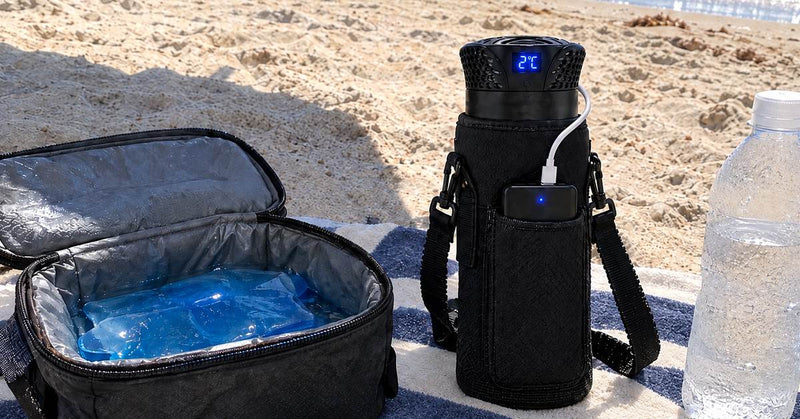
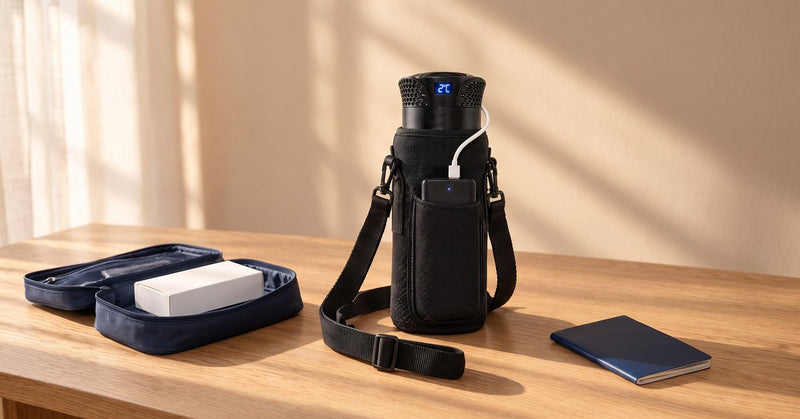
The Secrets Box by Practi, an electric medication cooler, is built around exactly that: it plugs into a wall outlet or a power bank, stays within 2 to 8°C (36 to 46°F) as long as it is plugged in, and shows the temperature on a display. It works from any USB source, including a wall outlet or a USB adapter for the car's lighter socket. The power bank and the car adapter are sold separately and are not included in the box. There's no disconnect alert, so check the connection now and then.
Read next: Medication in your suitcase or your hand luggage? The short answer and why
How this article was written. We gathered this information from public sources online and brought it together in one place. We are not a medical body, we have no medical or pharmacy qualification, and no medical professional has gone over this article.
Accurate as of the update date shown at the top of this article. Information may change. Security procedures, airline guidelines, medication leaflets and product specifications change from time to time, and the information here may no longer be up to date. It is the reader's responsibility to verify every detail with the official source before acting on it.
This article is general information, not medical advice. For questions about your medication, talk to your pharmacist or doctor. It contains no recommendation on medication storage, dose, method of use or how long a medication stays usable. The only sources for those questions are your medication's patient leaflet, your pharmacist and your doctor. Responsibility for storing and using the medication lies solely with the user and their healthcare provider. The Secrets Box is a cooled carrying case for medication and is not a medical device.
Another question? All frequently asked questions · or message us on WhatsApp