Travel Medication Packing Checklist for Trips Abroad (Printable)

The minimum packing list for a trip with medication that needs refrigeration: a printed prescription, the original packaging, the patient leaflet, extra supply beyond your travel days, a cooling solution that holds the range your leaflet specifies, photos of every document on your phone, your doctor's and health fund's details, and your airline's phone number for the question that comes up at the last minute. All of it travels with you in the cabin, not in your suitcase.
In this article
This information is general and for convenience only, and it is not medical advice. Medication storage, temperatures, quantities and doses are set by your doctor, your pharmacist and the manufacturer's leaflet. Talk to a professional before making any decision.
This list is organized by when you do each thing, not by category, because that's what actually breaks down. Nobody forgets the medication. People forget the prescription, the cable, and the question they could have asked a week earlier. You can print this page, or save it and check items off on your phone.
A week before: everything that depends on someone else
The items here need an appointment, a form, or a person who has to get back to you. That's why they come first.
- A printed prescription for every medication given by injection or pump. Clalit Health Services notes that travelers carrying medication given by syringe or pump, such as insulin, must show a prescription to the security staff at the airport
- A prescription or confirmation in English, if your health fund issues one. It helps abroad, not at Ben Gurion Airport
- Extra supply. How much medication to take is a question for your doctor or pharmacist. What is a logistics question: flights get cancelled, connections get missed and suitcases disappear, so don't travel with exactly as much as you need
- A letter from your doctor if you're carrying needles or syringes. Not required by Clalit's guidance, which talks about a prescription, but it shortens conversations
- Travel insurance that covers a pre-existing condition. This is an item to read, not just tick
- A cooling solution that covers the whole trip, including arrival day before check-in and departure day after check-out
- A call to your airline about the cooling equipment you're taking. Five minutes, and the question is settled
Source: Clalit Health Services, medication to take abroad (Hebrew)
Where the storage and use instructions for your medication are written
This item isn't on the list by chance. No website can give you the storage conditions for your product, not even us. They're written in the patient leaflet, and the leaflet is available to anyone in the Israeli Ministry of Health drug database (Pharmaceutical Division). The labels below are translated from the site's Hebrew interface.
- Go to the website. The tab that opens by default is search for a medication by brand name or active ingredient
- Type the name on the box, in Hebrew or English, and choose from the autocomplete list
- Check on the result card that the product name and the dose match yours, and click more details
- Open the leaflets tab, and choose the patient leaflet in Hebrew with the most recent date
- Inside the leaflet, look for the section how to store the medication? and within it the heading storage conditions
Take a photo of that section on your phone and add it to the folder in the next section. The leaflet in your box and the pharmacist who gave it to you take priority over any website, including this one.
What to photograph on your phone before you leave
This is the part people skip, and it's the one that saves you when a bag gets left in a taxi.
- The prescription, both sides if it has two
- The original packaging, so the product name, the dose and the batch number are readable
- The patient leaflet, especially the section on how to store the medication
- Your passport and boarding passes
- Your insurance policy and its emergency hotline number
- The medication's name in English, and also the generic name. The same medication is sometimes sold under a different name in another country
- Your doctor's details and your health fund clinic's number
And once you've taken the photos, email or message the whole folder to yourself. A phone can fall in water. The cloud can't.
What to check about your destination
- Whether the room has a fridge, and whether it keeps running when you're not in the room. It's worth asking the hotel in writing
- The expected peak temperature in the area on those dates
- What type of outlet and voltage they have, and which adapter you need
- Where the nearest pharmacy is and its opening hours
- Whether your medication is sold there at all, and under what name
- If you're renting a car: a car parked in the sun reaches temperatures that have nothing to do with the air temperature outside. It isn't a storage place, and neither is the glove compartment
The night before
- Your medication and your cooling solution travel with you in the cabin, not in your suitcase. Clalit recommends keeping medication in your hand luggage and not in the suitcase sent to the hold, partly because medication can be damaged by the extreme temperatures in the hold
- Charge the power bank fully, if your cooling solution runs on power
- Make sure the cable is in your bag, and not in the wall socket at home
- Keep the medication and syringes in their intact sealed plastic cover, with at least one original box in your bag (you can fold or cut it down)
- Split your supply between two bags, if two of you are traveling
- Take out what you need for the first day separately, so you don't have to unpack your whole bag at the airport
- Put the prescription in the outer pocket, not at the bottom of the bag
At the airport
- Declare before screening, not after. Clalit writes that you should tell the officer about medication and baby food before your bag is scanned
- The prescription in your hand
- Don't move the medication to your checked suitcase, even if you're asked to cut down on bags
- If you have a connection in the United States, it's worth knowing two things the TSA publishes: medical liquids are allowed in a reasonable quantity above the 100 ml (3.4 oz) limit, as long as you declare them at screening, and medical ice packs and gel packs are allowed even when partly or fully thawed, also as long as you declare them. These are US rules, and they apply at airports in the United States, not at Ben Gurion Airport
Sources: TSA, Disabilities and Medical Conditions · TSA, Gel Ice Packs
More about the screening itself is in our article on flying from Israel with refrigerated medication.
Questions that keep coming up
What shouldn't I forget to pack when traveling with medication that needs refrigeration?
A printed prescription, the original packaging, the patient leaflet, extra supply, a cooling solution and photos of your documents on your phone. All of it travels with you in the cabin, not in your suitcase.
How much medication should I take on a trip?
That's a question for your doctor or pharmacist. On the logistics side, flights get cancelled and suitcases disappear, so don't travel with exactly as much as you need.
Do I need a letter from my doctor to fly with needles or syringes?
Clalit's guidance talks about a prescription, and it doesn't require a letter. A letter from your doctor still shortens conversations.
Can I rely on the fridge in my hotel room?
Not always. It's worth asking the hotel in advance and in writing whether the room has a fridge, and whether it keeps running when you're not in the room.
What a list can't solve
You can tick every item here and still sit at a connection not knowing the temperature inside your bag. That's where a list ends, because it isn't a question of organization, it's a question of information.
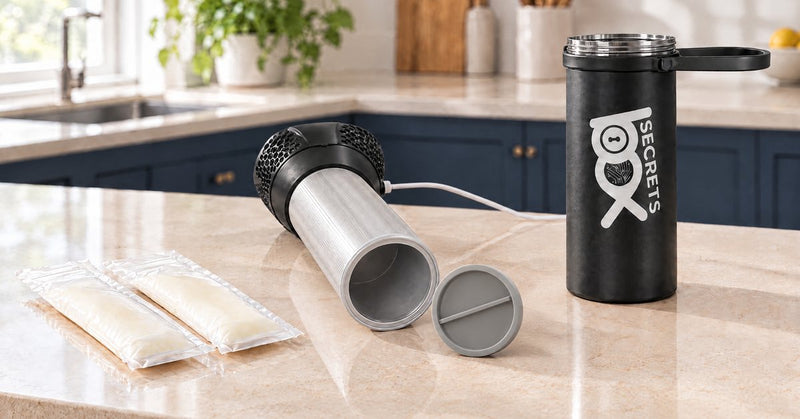
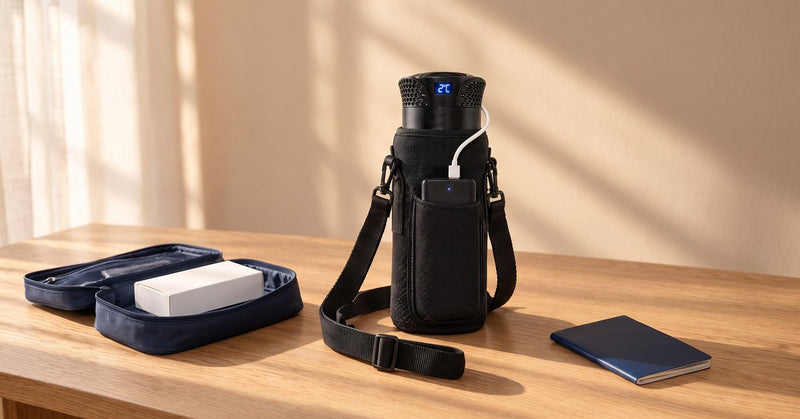
The Secrets Box by Practi was built for exactly this part: it stays within 2 to 8°C (36 to 46°F) as long as it is plugged in, and shows the temperature on a digital display. The box includes a USB to USB-C cable, and it needs a 10W source. It works from any USB source: a wall outlet, a power bank, or a USB adapter for the car's lighter socket. The power bank is sold separately (20,000mAh or more recommended, 10,000mAh also works), and the car adapter isn't included in the box either. There's also a bio-gel ice pack as a backup, for hours with no power at all.
And two limitations it's fair for you to know up front: there's no disconnect alert, so it's worth glancing at the display now and then. And it's a cooled carrying case for medication. It keeps a temperature range, and that's all it does.
You can read about it here: See the product page
How this article was written. We gathered this information from public sources online and brought it together in one place. We are not a medical body, we have no medical or pharmacy qualification, and no medical professional has gone over this article.
Accurate as of the update date shown at the top of this article. Information may change. Security procedures, airline guidelines, medication leaflets and product specifications change from time to time, and the information here may no longer be up to date. It is the reader's responsibility to verify every detail with the official source before acting on it.
This article is general information, not medical advice. For questions about your medication, talk to your pharmacist or doctor. It contains no recommendation on medication storage, dose, method of use or how long a medication stays usable. The only sources for those questions are your medication's patient leaflet, your pharmacist and your doctor. Responsibility for storing and using the medication lies solely with the user and their healthcare provider. The Secrets Box is a cooled carrying case for medication and is not a medical device.
Another question? All frequently asked questions · or message us on WhatsApp