How to Fly with Insulin: What to Prepare Before You Get to the Airport

The most important thing to know before flying with an insulin pump or a continuous glucose monitor: the guidelines differ between manufacturers and, according to patient organizations, also between models. And there's a real difference between three things that sound alike: a metal detector, a body scanner and an X-ray machine. The only advice that's right for everyone: check your model's manufacturer website before the trip.
In this article
This information is general and for convenience only, and it is not medical advice. Medication storage, temperatures and doses are set by your doctor, your pharmacist and the manufacturer's leaflet. Talk to a professional before making any decision.
First, the Israeli part
Clalit Health Services states that travelers carrying medication given by syringe or pump, such as insulin, must show a prescription to the security staff at the airport, and that security guidelines require medication to be kept in its original packaging.
Source: Clalit, medication to take abroad (Hebrew). More about the screening itself is in our article on flying from Israel with refrigerated medication.
Three completely different machines, and it's worth telling them apart
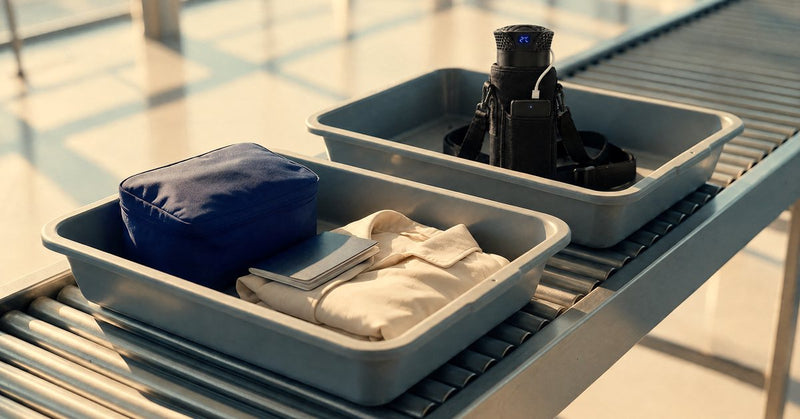
At the security checkpoint there are three types of screening, and manufacturers treat each one differently:
- A metal detector, the frame you walk through
- A body scanner, the booth where you raise your arms
- An X-ray machine, which your bags go through
These are three different technologies, so the manufacturer's guidance for each one can be different. If you've ever wondered why one time you got through the airport with no problem and another time you were told to take it off, that's usually the reason: you didn't go through the same machine.
What one manufacturer publishes, as an example
We won't tell you what to do with your device, and we don't know your model. This is just one example, from the manufacturer's own website:
Medtronic (MiniMed) publishes that you can keep wearing the device through a metal detector, that the pump and sensor should be removed before going through a body scanner, and that the devices should not go through the X-ray machine. They also note that anyone who doesn't want to remove the devices can ask for an alternative pat-down, and they refer to an airport information card that comes with the user guide.
Source: Medtronic MiniMed, Travel
What this doesn't mean. This is one manufacturer's guidance, for its own models. It doesn't apply to another manufacturer's device, and not necessarily to every model from the same manufacturer. Don't rely on an article, not even this one. Open your model's manufacturer website.
The UK patient organization Breakthrough T1D puts it this way: sensor and pump manufacturers have their own guidance on which devices can go through metal detectors, X-ray machines and body scanners, and the guidance varies between devices. That's why they refer people to the manufacturers' websites.
Source: Breakthrough T1D UK, Airport security and diabetes technology
A limitation we want to be upfront about: we looked for an official Israeli guideline that goes model by model, and didn't find one. Everything we found in Hebrew talks about a prescription, declaring your medication and the original packaging, not about body scanners.
The option most people don't know exists
If you don't want to remove your device, you can ask for an alternative screening method: a pat-down and a swab test. Breakthrough T1D says explicitly that you can ask the security officer for this, and Medtronic also refers to this option.
Our tip: ask for it before you join the line, not when you're already standing at the scanner with a line behind you. That takes away most of the stress.
How to keep insulin cool throughout the flight
The range your product needs is written in its patient leaflet, not here. What you can plan in advance is the logistics of the journey, from home to your room at the destination:
- In your hand luggage, not your suitcase. Clalit recommends keeping medication in your hand luggage and not in the suitcase sent to the hold.
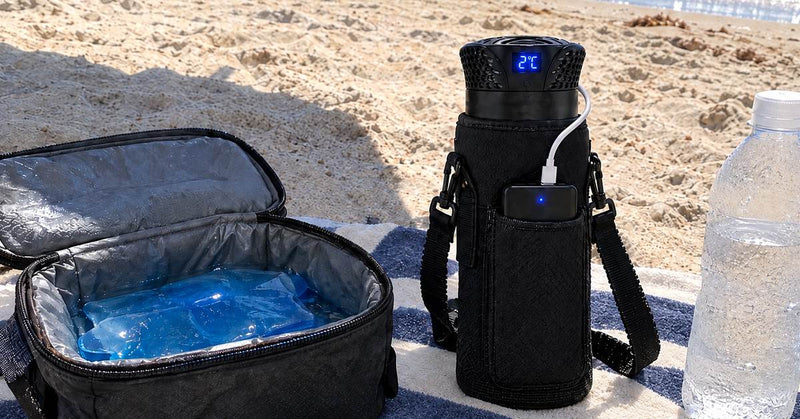
- Choose a cooling solution for the whole way in advance. A cooler bag with ice packs cools until the ice pack thaws, and you usually can't see the temperature inside. A portable medication fridge cools as long as it is plugged into a wall outlet or a power bank, and shows the temperature on a display. The full comparison is in our article Medication cooler bag or portable fridge?
- Plan for the whole journey, not just the flight hours. The drive to the airport, the wait, a connection, and the way from the airport to the hotel.
- Ask your airline before the flight about anything critical for you, including its rules for power banks in hand luggage.
How much supply to take
That's a medical question, and the answer belongs to your doctor or pharmacist. What is in our area is the logistics: a cancelled flight, a missed connection or a lost suitcase happen, and they have nothing to do with your health.
Two logistics points worth thinking about in advance:
- Split your supply. Don't put everything in one place. If two of you are traveling, split it between both bags
- Medication names change between countries. The same medication may be sold under a different name. Take photos of the leaflet and the packaging, so you have something to show a pharmacist abroad
And where the storage and use instructions for your medication are written
We don't write how long insulin, or any other medication, stays usable outside the fridge, or at what temperature. That isn't our knowledge, and we have no qualification to decide it. It's written in these places:
- The patient leaflet inside the box, in the storage conditions section
- Your pharmacist, who can show or print the leaflet if it's lost
- The manufacturer's website, which publishes the storage conditions itself
- Your doctor, for any question about the treatment itself
It's worth taking a photo of the storage section on your phone before the trip, so the answer is with you at the airport too.
Questions that keep coming up
Do I need to remove an insulin pump or sensor at security screening?
There's no single answer for everyone. The guidelines differ between manufacturers and, according to patient organizations, also between models, so check your model's manufacturer website before the trip.
What can I do if I don't want to remove the device at screening?
You can ask the security officer for an alternative screening method: a pat-down and a swab test. It's worth asking for it before you join the line.
Do I need a prescription to fly with insulin from Israel?
Yes. According to Clalit Health Services, anyone carrying medication given by syringe or pump, such as insulin, must show a prescription to the security staff at the airport, and the medication should be in its original packaging.
How do I keep insulin cool on a flight?
Keep it with you in the cabin, in its original packaging, inside a cooling solution planned for the whole way: a cooler bag with ice packs, or a portable medication fridge connected to a power bank (the power bank is sold separately). The range your insulin needs is written in its patient leaflet.
How long can insulin stay out of the fridge while traveling?
We don't publish that, because it isn't ours to say. It's written in the patient leaflet inside the box, in the storage conditions section, and you can also ask your pharmacist or check the medication manufacturer's website.
And the part that doesn't end at the airport
Security takes minutes. The trip takes days.
As long as it is plugged in, our fridge stays within 2 to 8°C (36 to 46°F), the range commonly used for medication that needs refrigeration. On a two-week vacation, the alternatives are a hotel fridge, which isn't always in the room and doesn't always keep running when you're not there, or a cooler bag that needs fresh ice every day and gives you no way to know what's happening inside.
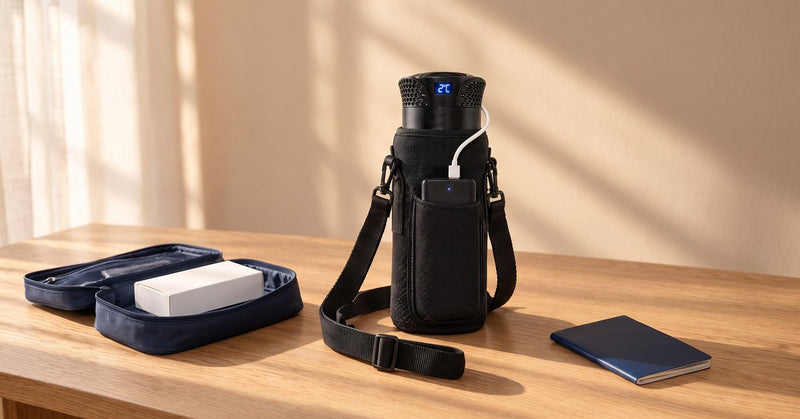
The Secrets Box by Practi was built for exactly this part: it plugs into a wall outlet or a power bank, stays within 2 to 8°C (36 to 46°F) as long as it is plugged in, and shows the temperature on a display. It works from any USB source, including a wall outlet or a USB adapter for the car's lighter socket. The power bank and the car adapter are sold separately and are not included in the box. There's no disconnect alert, so check the connection now and then.
How this article was written. We gathered this information from public sources online and brought it together in one place. We are not a medical body, we have no medical or pharmacy qualification, and no medical professional has gone over this article.
Accurate as of the update date shown at the top of this article. Information may change. Security procedures, airline guidelines, medication leaflets and product specifications change from time to time, and the information here may no longer be up to date. It is the reader's responsibility to verify every detail with the official source before acting on it.
This article is general information, not medical advice. For questions about your medication, talk to your pharmacist or doctor. It contains no recommendation on medication storage, dose, method of use or how long a medication stays usable. The only sources for those questions are your medication's patient leaflet, your pharmacist and your doctor. Responsibility for storing and using the medication lies solely with the user and their healthcare provider. The Secrets Box is a cooled carrying case for medication and is not a medical device.
Another question? All frequently asked questions · or message us on WhatsApp